Mostrando entradas con la etiqueta Inglés. Mostrar todas las entradas

English vocabulary II

Sofa.........sofá
Second………segundo
Seventh……..séptimo
Sixth………….sexto
Table………….mesa
Tenth………..décimo
Toilette……..cuarto de baño
Twelfth………duodécimo
Flat……………..piso
Third……………..tercero
First……………..primero
Second…………segundo
Fourth………….cuarto
Fifth……………..quinto
Sixth……………..sexto
Seventh………….séptimo
Eight………………..octavo
Ninth………………noveno
Tenth……………..décimo
Eleventh…………undécimo
Twelfth……………duodécimo

English vocabulary I

Bathroom……………cuarto de baño
Bed…………………..cama
Bedroom…………..habitación
Bookshelves……….baldas
Cooker……………cocinero
Cupboard…………armario
Dinning room……..comedor
Eight………………..ocho
Eleventh………….undecimo
Fifth……………quinto
First……………primero
House………….casa
Kitchen………..cocina
Lamp……………lámpara
Like…………..gustar
Living room………despacho
Ninth………………noveno
Poster…………..poster
Rug………………alfombra
Joaquín.

Hockey

The hockey began in Chicago, but the first drawing of Hochey appeared in a grave in the river Nile.
And the first person who was involve in the subjet was Hans Brinker . He designed the first wood wheels of a rollerblade in 1773.
A hundred years later, an industry from England bought the permission to a man called Jean Garin, who designed the best wheels of the moment.
In 1867 they build a place to skate in Paris.
The new roller blades had a stud in the front side of it to break.
Finally, in 20th century , the sport came to Europe, thanks to Edward Crawford.
Álvaro.

Sharon and Robert


Sharon: Hi, Robert. I´m waiting for you. Where are you? You´re late.
Robert: Oh, sorry Sharon. I´m exercising in the park. What´s the time?
Sharon: It´s quarter past one.
Robert: Sorry, I´m late. How do I get to the restaurant from the park?
Sharon: Go strainght on Park Street. The turn right at Baker Street. The restaurant in on the right.
Robert: Ok. I´m coming.
Sharon: Hola, Robert. Te estoy esperando. ¿Dónde estás? Llegas tarde
Robert: Oh, lo siento Sharon. Estoy haciendo ejercicio en el parque. ¿Qué hora es?
Sharon: Es la una y cuarto.Robert: Perdon llego tarde. ¿Cómo llego al restaurante desde el parque?
Sharon: Cruza Park Street. Gira a la derecha en Baker Street. El restaurante esta a la derecha Robert: Ok. Estoy llegando.
Cosme

Bill and Mary

Bill: Good morning. I´m your tour guide, Bill Hudson.
Mary: Nice to meet you. I am Mary.
Bill: Where are you from, Mary?
Mary: I´m from Brazil, where are you from?
Bill: I´m From Sunderland. It´s near Newcastle. Mary, do you like art museum?
Mary: Yes, I do.
Bill: Good. Our firs stop is an art museum.

TRADUCIDO
Bill: Buenos días. Soy tu guía, Bill Hudson.
María: Encantado de conocerte. Yo soy María.
Bill: ¿De dónde eres, María?
María: Yo soy de Brasil, donde eres?
Bill: Yo soy de Sunderland. Es cerca de Newcastle. María, ¿te gusta el museo de arte?
María: Sí,
Bill: Bien. Nuestra primera parada es un museo de arte.
Cosme

Circuits:

Electrical current is the flow of electrical charges. It transmits nergy called electricity.
Conductors: electrical current flows easily throught conductors.
Insulators: electrical current doen not flow easily throught insulators (Plastic, wood...)
An electric circuit consist of diferent components connected to each other to allow the flow of an electrical current.
We need:
  • A generator. (battery)

  • An electrical component ( light bulb, motor)

  • Conducting wires.

  • Switch.

- - - - - - - - - - - - - - -
La corriente eléctrica es el paso de cargas eléctricas. Transmite una energía llamada electricidad.

Conductores: La electricidad puede pasar facilmente por ellos.

Aislantes: La electricidad no puede pasar facilmente por ellos.


Un circuito eléctrico consiste en diferentes componentes conectados entre ellos para permitir el paso de una corriente eléctrica.

Necesitamos:
  • Un generador (pila)

  • Un componente eléctrico (bombilla, motor)

  • Cables

  • Interruptor

Álvaro

Magnets:

A magnet is a object which can attract objets.
This attraction is called magnetism.
Magnets can be natural such as the mineral magnetite, or artificial.
Magnets have two poles North and South.
When the oppposite poles of two magnets are placed together the magnets attract each other. The magnet repels each other when same poles are placed together.
Magnets create magnetic fields.
Electromagnets: An electromagnets is a conducting wire wrapped.
The uses of magnets: Magnets are used in electric motors and generators for telephones, lights, televisions, computers, dvds, and more...
Magnetics recording media are used in audio cassettes, floppy disks and hard disks to store information in a very small space.
Magnetic straps: store information on credit cards.
Electromagnets are used in television, loadspeackers...

- - - - - - - - - - - - - - - - - - - - - - -
Un imán es un objeto que puede atraer otros objetos.
Esta atracción se llama magnetismo.
Los imanes pueden ser naturales como el mineral magnetita o artificiales.
Los imanes tienen dos polos, Norte y Sur.
Cuando los polos opuestos de dos imanes se juntan, se atraen uno al otro.
Cuando los polos iguales de dos imanes se juntan, se repelen.
Los imanes crean campos magnéticos.
Los electroimanes conducen electricidad.
Los usos de los imanes, los imanes se usan en motores electricos y genradores para teléfonos, luces, televisión, ordenador , dvds, y más...
Los imanes también se utilizan para almacenar información en un espacio muy reducido. Como los cassettes, los diskettes...
Tambien se almacena informacion en la banda magnética de las tarjetas de crédito.
Los electroimanes se utilizan en la televisión, los altavoces...
Álvaro.

Exercises 10,11,12:

Exercise 10:
  1. Sam is writing an e-mail at the moment: Sam está escribiendo un e-mail en este momento.
  2. We aren't dancing right now: Ahora mismo no estamos bailando.
  3. Are you talking to me?: ¿Me estas hablando a mí?
  4. I am watching TV now:Yo ahora estoy viendo la TV.
  5. What are you doing?: ¿Qué estás haciendo?

Exercise 11:

  1. Robert likes football: A Robert le gusta el futbol.
  2. We understand English: Nosotros entendemos ingles.
  3. Do you exercise every day?: ¿Te entrenas todos los dias?
  4. I am listening to you.:Yo te estoy escuchando.
  5. I want some coffe right now: Yo quiero café ahora mismo.

Exercise 12:

  1. You were late: Tu ibas tarde.
  2. I was in the park: Yo estaba en el parque.
  3. We were at school: Nosotros estábamos en la escuela.
  4. Janet was at home: Janet estaba en casa.
  5. The children were excited: Los chicos estaban nerviosos.

Erlantz

Exercises 7,8,9:

  • Exercise 7:
  1. You sometimes play electric guitar: Tu muchas veces tocas la guitarra eléctrica.
  2. She dances every day. Ella baila todos los días.
  3. I usually exercise at the weekends: Yo normalmente entreno los fines de semana.
  4. Robert travels every week: Robert viaja todas las semanas.
  5. We often play football in the evenings: Nosotros a menudo jugamos por las tardes.
  • Exercise 8:
  1. I don't like your hair: No me gusta tu pelo.
  2. Marck and I don't study chinese: Marck y yo no estudiamos chino.
  3. Sharon doesn't live in London: Sharon no vive en Londres.
  4. Paul doesn't teach English: Paul no enseña inglés.
  5. You don't play on the computer: Tu no juegas en el ordenador.
  • Exercise 9:
  1. You live in Paris: Do you live in Paris?
  2. Patrick works in a club: Does Patrick work in a club?
  3. Your friends like London: Do your friends like London?
  4. Helen exercise every day: Does Helen exercise every day?
  5. You play football in the afternoon: Do you play football in the afternoon?

Erlantz

4-5-6 Grammar exercises

Exercise 4:
  • Dan is a/an electrician : Dan es un electricista.
  • I am a/an vet : Yo soy un veterinario.
  • Have you got some/any money here? : ¿Tienes algo de dinero aqui?
  • I have got some/any pens : Yo tengo unos boligráfos.
  • We haven't got some/any homework : Nosotros no tenemos ningun trabajo.
Exercise 5:
  • There is a cat on the bed: Hay un gato encima de la cama.
  • There are two dogs in the home: Hay dos perros en la casa.
  • There aren't any pictures in the room: No hay cuadros en la habitación.
  • There isn't any homework today: Hoy no hay ningún trabajo.
  • There is some coffee on the table: Hay cafe encima de la mesa.

Exercise 6:

  • Is there any tea? Yes,there is: ¿Hay algo de cafe? Si, si hay.
  • Is there any children here? Yes, there is: ¿Hay aqui algún niño? Si, si hay
  • Are there any apples in the bag? No, there aren´t. ¿Hay alguna manzana en la bolsa? No, no hay.
  • Is there a cinema on your street? Yes, there is. ¿Hay algún cine en tu calle? Si, si hay.
  • Is there any water in the glass? No, there isn´t. ¿Hay agua en el vaso? No, no hay.

Erlantz

1-2-3 grammar exercises:

Exercise 1:
  • I am Italian: Yo soy italiano.
  • Are you chinese?: ¿Eres tu chino?
  • She isn't teacher: Ella no es una profesora.
  • We are students: Nosotros somos estudiantes.
  • Is Dan at School?: ¿Está Dan en la escuela?

Exercise 2:

  • Tom has got a book: Tom tiene un libro.
  • Kate hasn't got a pen: Kate no tiene un bolígrafo.
  • Have you got a dictionary?: ¿Tienes tú un diccionario?
  • We haven't got a cat: Nosotros no tenemos un gato.
  • I have got a long name: Yo tengo un nombre largo.

Exercise 3:

  • I like tea: Me gusta el té.
  • I like listening to music: Me gusta escuchar música.
  • She likes cats: A ella le gusta los gatos.
  • He likes playing football: A él le gusta jugar a fútbol.
  • Do you like studying?: ¿Te gusta estudiar?
Erlantz

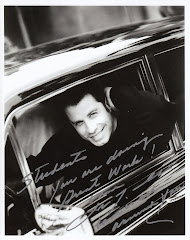
La carta de Bill Clinton a los alumnos del Aula de Apoyo de Gaztelueta:

Bill Clinton nos ha remitido junto a su fotografía una carta. De ella queremos extraer dos parráfos que creemos más importantes y que hemos traducido con la colaboración desinteresada de D. Javier Camacho:

"Education is one of the most effective tools indiviuals can use to create a brighter future for themselves and for their nation. By going to classes, doing your homeworks, respecting your teachers, and working to improve your school community, you will be preparating for the time when you and your generation will be leading our world.
Don't be afraid to set high goals, with determination, effort, and imagination, you can do great things.
Best wishes for every happiness and sucess."

"La educación es una de las herramientas más efectivas que las personas pueden usar para crear un futuro mejor para ellos y para su país. Yendo a clases, haciendo vuestros deberes, respetando a vuestros profesores y trabajando para mejorar la comunidad del colegio, os estaréis preparando para el momento en el que vosotros y vuestra generación lideréis nuestro mundo.
No tengáis miedo de poneros objetivos altos, con determinación, esfuerzo e imaginación, podréis hacer grandes cosas.
Los mejores deseos para vuestra felicidad y éxito."
Cosme.

Pocas cosas más se pueden decir después de leer los ánimos que Bill Clinton nos da a todos para seguir avanzando.
Mil gracias a todos los que nos leéis y apoyas realizando comentarios, mandándonos trabajo, mandándonos fotos...
D. Tomás

A plant that eats insects:

Most plants got all the minerals they need from the soil. But the Venus´s- flytrap grow in soil that does not have enough minerals.
Where does the Venus´s- flaytrap get the minerals it needs?
It "traps flies" and eats them.
It gets its minerals from the insects it catches.
Each leaf of the fly trap has six hairs. When an insect touches there hairs, the sides of the leaf close.
The insect gets caught in the leaf.
The insect cannot escape. The Venus´s - flytrap has special juices that break down the insect to help the plant grow.
It takes the plant 5 to 10 days to use up the insect. Then leaf opens up and is ready to catch another insect.
The Venus´s - Flytrap grows only in one small part of the Units States.
This part is a strip of wet, swampy ground in North Carolina. This area is only about 1.000 square kilomaters.

Vocabulary:
SOIL: SUELO
GROW: CRECER
ENOUGHT: SUFICIENTE
HAIR: PELO
LEAF: HOJA
JUICE: JUGO
USE UP: DIGERIR

Cosme

VOCABULARY

April: Abril
August: Agosto
Bakery: Panadería
Bank: Banco
Birthday: Cumpleaños
Buy: Comprar
Car: Coche
Cinema: Cine
Clothes shop: Tienda de ropa
Club: Club
Cook: Cocinero
Dance: Bailar
December: Diciembre
Don't worry: No te preocupes
February: Febrero
Hospital: Hospital
January: Enero
July: Julio
June: Junio
Library: Librería
March: Marzo
May: Mayo
November: Noviembre
Now: Ahora
October: Octubre
Party: Fiesta
Play (the guitar): Tocar guitarra
Post office: Oficina de correos
Problem: Problema
Rock grup: Grupo rokero
September: Septiembre
Shower: Chaparrón
Sing: Cantar
Speak: Hablar
Watch: Vigilar
Write: Escribir
Cosme

Meal - Comida

Fruits: Frutas
Orange: Naranja
Peach: Melocotón
Watermelon: Sandía
Apple: Manzana
Pear: Pera
Pineapple: Piña
Kiwi: Kiwi
Banana: Plátano
Grapes: Uvas
Strawberry: Fresa
Coconut: Coco
Blackberry: Mora
Milk: Leche
Cake: Tarta
Cereals: Cereales
Fish: Pescado
Salad: Ensalada
Vegetables: Hortalizas
Meat: Carne
Spaghettis: Espaguetis
Ricardo

Giraffes:

Giraffes live in Africa .They eat the leaves of trees. Many people cut down the trees that the giraffes need for food.
Then the giraffes have no food to eat. Giraffes need a safe place to live.
Giraffes need food to live.
Some people care about giraffes. These people know that giraffes need a safe place to live. Giraffes need a place with trees.
People found a good place for the giraffes to live.
The place has many trees.
People are not allowed to cut down the trees. Hunting is not allowed. This place is a park.
The people brought the giraffe to the park.
The giraffes are protected in the park.
The giraffes have plenty of food.
The giraffes live well in the park.
Álvaro

Making music:

The piano makes a sound when you push a piano key down.
When the key is pushed down, a small hammer hits a string.
The string moves back and forth. The string vibrates.
The string makes a sound. Every key has its own hammer.
Every hammer has its own string.
Each piano string is different. Some string are long.
They make low sound when a hammer hits them. Some string are short.
They make high sound when a hammer hits them.
You can push a key lightly. Then the hammer hits the string lightly.
A soft sound is made.
You can push a key hard. Then the hammer hits the string hard.
A loud sound is made.
Cosme

Encuesta de Álvaro:

Queridos lectores, vamos a hacer una encuesta que espero que contesteis sobre el blog. Con los datos que obtengamos realizaremos los cambios que pensemos que hay que modificar.
Muchas gracias.Álvaro.

¿Qué es lo que más te gusta del blog?

¿Te gusta que cada mes cambiemos de música?

De estos famosos, ¿Cual te gusta mas?

¿En qué idioma te gusta leernos?

Nos lees desde...